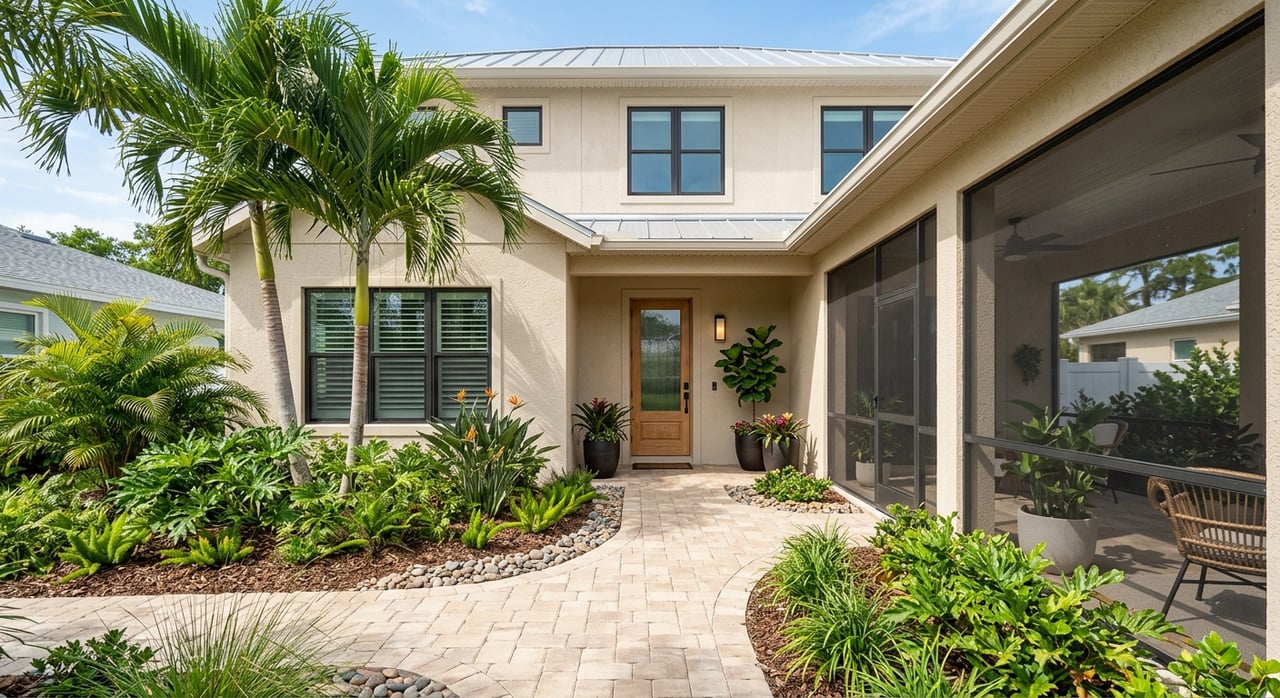
Thinking about turning a Heritage Landing home into a rental? It can look simple from the outside, but the real numbers and rules often live in the fine print. If you want to buy with confidence, you need to know how lease terms, amenity transfers, seasonal demand, and carrying costs can affect your return. Let’s dive in.
Why Heritage Landing Needs Careful Review
Heritage Landing in Punta Gorda operates with more than one layer of rules. Owners are automatically members of the Heritage Landing Master Association, and the ARC standards manual notes that separate neighborhood declarations may add more restrictions.
That matters because lease rules may not be identical across the whole community. A condo, terrace, veranda, or single-family home may not follow the same rental pattern. If you are investing here, the exact address matters more than the community name alone.
The ARC standards also show that rentals are part of the community framework. Approved "House for Rent" signs are allowed, which supports that leasing exists in some form, but that does not tell you the minimum lease term for every property.
Lease Terms Can Vary by Address
One of the biggest mistakes investors make is assuming every Heritage Landing property has the same rental rules. The safer approach is to confirm the recorded declaration, neighborhood rules, and any applicable sub-association documents for the specific home you plan to buy.
Public listing examples often show 30-day minimums or 1-month minimum leases. Some also mention limits such as up to 12 transfers per year. These examples are useful for spotting market patterns, but they are not a substitute for the governing documents.
For that reason, Heritage Landing often fits better as a seasonal or mid-term rental play than a true short-term vacation rental strategy. If your investment plan depends on flexible turnover, you will want written confirmation before you move forward.
Golf and Amenities Have Separate Rules
A property may be rentable, but that does not automatically mean all club privileges transfer the same way. Heritage Landing Golf Club has its own rules for tenant golf transfers, and those rules are important if amenity access is part of your rental appeal.
The club rules state that members in good standing may transfer golf privileges to a tenant for a minimum of 31 days, or one month, whichever is less. The rules also allow no more than 12 transfers within 12 months.
There is also paperwork involved. Transfer forms and a copy of the lease must be submitted 15 days before the transfer period begins, and the club charges an administrative fee set by the board.
For investors, this creates a practical takeaway: HOA leasing approval and club amenity access are not the same thing. If your renter expects golf access, you need to verify that process early.
Seasonal Demand Is Likely Strongest in Winter
Southwest Florida has long been a draw for winter visitors, and Punta Gorda is part of that pattern. That supports the idea that Heritage Landing rental demand is likely strongest in winter and early spring.
Public rental listings in Heritage Landing also point to the likely renter profile. Some market homes as suitable for snowbirds and corporate furnished rentals with a 30-day minimum rental.
That suggests a few likely demand groups:
- Seasonal winter renters
- Golf-oriented second-home users
- Corporate or relocation renters
- Mid-term furnished renters
If you are comparing annual leasing versus seasonal leasing, timing matters. The stronger winter visitor cycle can support seasonal demand, but the lease restrictions may limit how often you can turn the property.
Carrying Costs Can Change the Math Fast
A Heritage Landing investment should be underwritten carefully because the fee stack can be meaningful. Public listing examples show that some units carry substantial recurring costs, and these numbers can vary by parcel.
One public example shows total annual fees of $8,331.60, or $694.30 per month, along with a reported annual tax amount of $3,889.78. Another example shows total annual fees of $11,484, or $957 per month, plus a separate annual assessment amount and a reported annual tax amount of $5,290.35.
These are not community-wide averages, but they do show why investors should avoid broad assumptions. Monthly fees, taxes, and assessments can materially affect cash flow.
You should also budget for normal ownership and rental expenses beyond association dues and property taxes, including:
- Insurance
- Utilities
- Repairs and maintenance
- Vacancy periods
- Cleaning costs
- Property management
- Tenant screening fees
- Transfer or application fees
Shorter Rentals Bring Tax Compliance
If you plan to rent for six months or less, Charlotte County tax rules are a major part of your analysis. According to the Charlotte County Tax Collector, rentals of living quarters or accommodations for six months or less are subject to a 5% tourist development tax in addition to the 7% state sales tax.
The county also states that a bona fide written lease for more than six months is exempt from tourist tax and sales tax on lease payments. Monthly returns are due by the 20th day of the following month.
This means your lease strategy affects more than income. It also affects your compliance workload. A 30-day or seasonal rental model can create added filing and remittance responsibilities that would not apply to a longer-term lease.
Questions to Ask Before You Buy
Good investor due diligence in Heritage Landing starts with document review. Since rules can vary by parcel or sub-association, you want answers in writing before you rely on projected rental income.
Ask About Lease Rules
Start with the fundamentals:
- What is the exact minimum lease term for this address?
- Is there any owner-occupancy waiting period before leasing?
- Is there a cap on the number of leases or tenant transfers per year?
- Are the rules different for this property type than for other Heritage Landing homes?
These questions help you confirm whether the home fits your actual rental plan, not just a general neighborhood description.
Ask About Amenity Access
If your tenants will care about club access, ask:
- Can tenants receive access cards?
- Can golf privileges be transferred?
- How many cards are issued?
- What is the application timeline?
- What fees apply for transfers or processing?
A home that rents well on paper may be less competitive if amenity access is unclear or delayed.
Ask About Fees and Paperwork
Investors should also request the current fee schedule and resale materials. Important items include:
- Estoppel fees
- Transfer fees
- Application or screening fees
- Amenity fees
- Any capital contribution requirements
- Any special assessments
- Any annual food and beverage minimum, if applicable
The official resale packet also shows the HOA office expects the packet at least 30 days before closing and includes a $50 processing fee payable to the Master HOA. That is another reminder that administration is part of the ownership picture.
Ask About Operational Rules
Day-to-day rental logistics matter too. Confirm whether approved house-for-rent signs are allowed, and whether tenants must follow separate parking or pet rules tied to the property or sub-association.
You should also confirm whether your planned lease format triggers Charlotte County tourist-tax registration. A seasonal strategy may work well, but only if you are ready for the added compliance steps.
Best Way to Underwrite a Heritage Landing Rental
If you are evaluating a Heritage Landing purchase as an investment, the best approach is simple: underwrite conservatively. Treat the specific parcel documents as the controlling source for lease terms, and treat club amenity access as a separate approval path.
In practical terms, that means you should verify:
- Minimum lease term for the exact property
- Allowed number of leases or transfers per year
- Tenant access to golf or other amenities
- Monthly and annual fee layers
- Tax treatment based on lease length
- Required paperwork and timing before closing or occupancy
This kind of review helps you avoid buying a property that looks attractive online but does not match your intended rental model.
Why Local Guidance Matters
Heritage Landing can be appealing for investors because it sits within a Punta Gorda market that benefits from strong winter visitor interest. But it is not a one-size-fits-all rental environment.
The details matter here. One address may be a solid fit for seasonal furnished leasing, while another may work better as a longer-term hold. When rules, fees, and amenity access all influence performance, local guidance can save you time and expensive missteps.
If you are weighing a purchase in Heritage Landing and want help reviewing the numbers, documents, and neighborhood-level considerations, Jennifer Calenda can help you approach the decision with clarity.
FAQs
What lease term should you expect for a Heritage Landing rental property?
- Many public listing examples show 30-day or 1-month minimum leases, but the exact minimum term depends on the recorded declaration and any neighborhood or sub-association rules for the specific address.
Can Heritage Landing tenants use golf privileges?
- Golf privilege transfers may be allowed under club rules for a minimum of 31 days, or one month, whichever is less, with required forms, a copy of the lease, advance submission, and any applicable administrative fee.
Does a Heritage Landing seasonal rental owe tourist tax in Charlotte County?
- Yes. Rentals of six months or less are subject to Charlotte County's 5% tourist development tax in addition to the 7% state sales tax, with monthly returns due by the 20th of the following month.
What costs should you budget for a Heritage Landing investment home?
- In addition to taxes and association dues, you should budget for insurance, utilities, repairs, vacancy, cleaning, management, screening fees, and any transfer or application costs tied to the HOA or club.
What documents should you request before buying a Heritage Landing rental property?
- Ask for the recorded declaration for the exact parcel, any neighborhood declaration, master HOA rules, ARC guidelines, golf club rules if applicable, the current estoppel or fee sheet, and the resale packet instructions.
Is every Heritage Landing home subject to the same rental rules?
- No. The community has a master association structure, and separate neighborhood declarations may impose additional restrictions, so rental rules can vary by parcel or sub-association.